
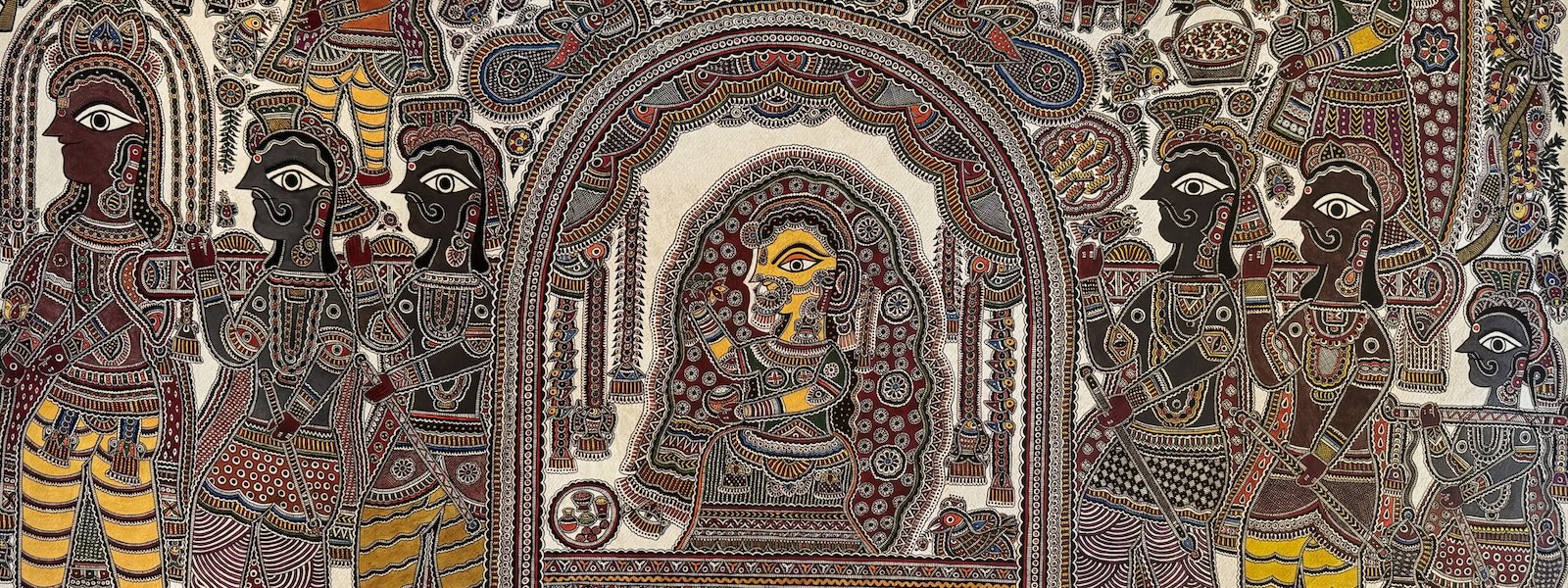
TRADITIONAL MITHILA ART FROM INDIA: THEMES, SYMBOLS, AND TECHNIQUES
Sonia Nayyar Patwardhan | Traditional Art
Mithila painting is a rich traditional Indian art form that draws on nature, mythology, and everyday life to render intricate, deeply meaningful narratives. As a generational art, its techniques and customs have been passed down through families for centuries.
At Laasya Art, we are privileged to work with acclaimed Mithila artists who have inherited and preserved this remarkable creative heritage. Many have been recognized for their excellence and dedication with India’s highest artistic honors, including the National Award and the Padma Shri.
In this blog, we share the unique process behind Mithila paintings as well as the symbols and stories contained within them.
Natural Materials and Techniques in Mithila Art
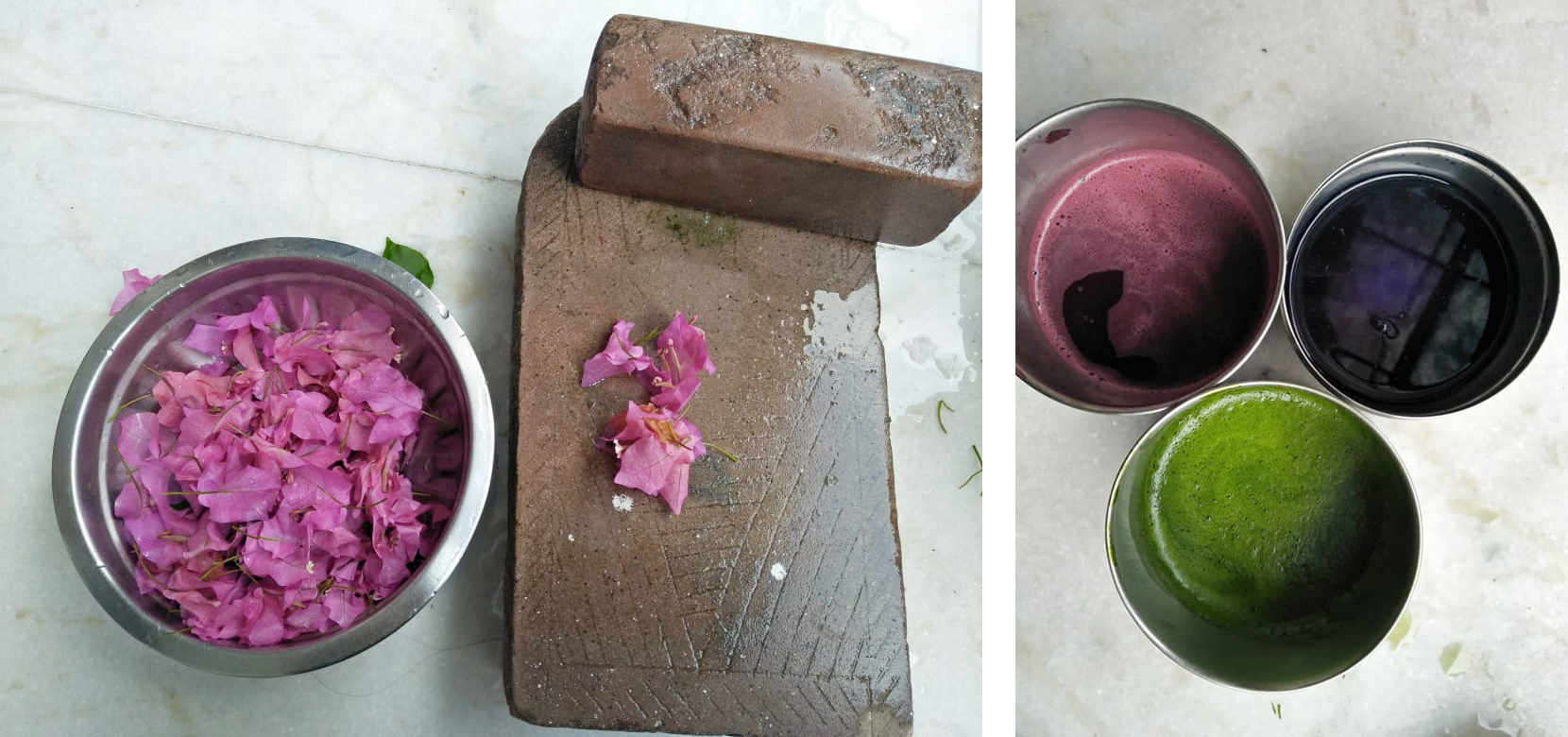
One of Laasya Art’s senior Mithila artists—a generational artist and a winner of the National Award—shared her insights into the traditional Madhubani techniques that she follows:
- Treating the paper with gobar (cow dung): Gobar is diluted with water and sieved through cloth to remove impurities before applying to the paper. This coating not only strengthens the handmade paper and acts as a fixative for the colors, but its antibiotic qualities help preserve the painting for many years.
- Making black pigment from kajal (soot): Kajal is collected from earthen lamps and mixed with gobar or banana plant water in addition to gond, which is a resin tapped from trees. An essential ingredient, gond helps bind and fix the colors.
- Painting with bamboo sticks: Traditionally, Mithila artists paint with bamboo sticks, not brushes. The tip of the bamboo stick is wrapped with cotton or fine cloth, and its thickness can be adjusted to achieve lines of varying sizes.
Decoding the Paintings: Iconic Motifs and Key Themes in Madhubani Art
Below, we explore common Mithila art motifs and meanings across three main themes:
- Mythology
- Nature
- Everyday life
Mythology: Cosmic Balance and the Divine
Indian mythology provides the foundational narrative for many Mithila works, with artists using specific visual cues to identify deities and convey spiritual ideas.
Some of the most popular deities and scenes include:
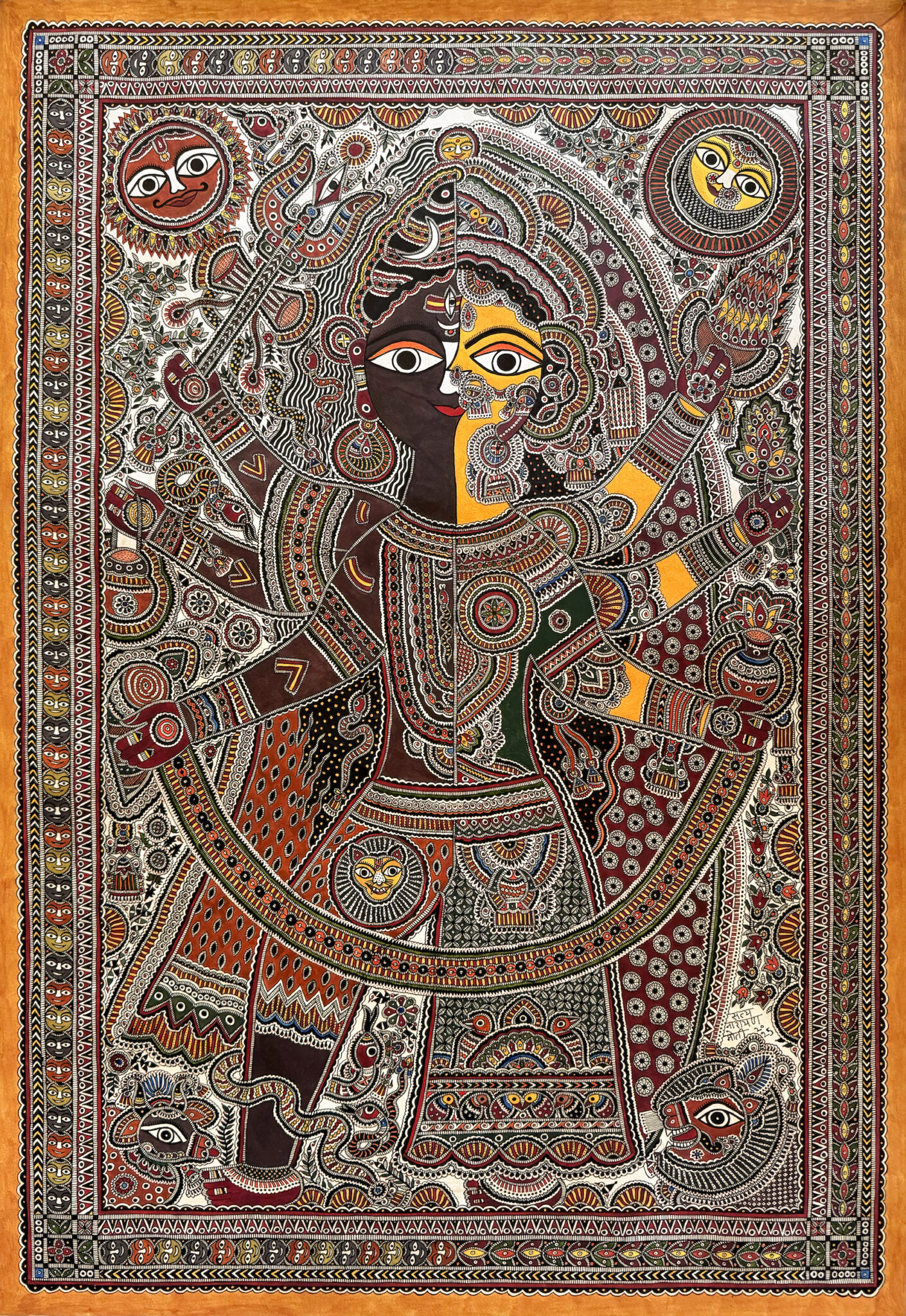
- Ardh-Narishwar: The composite form of Shiva and Shakti, the concept of Ardh-Narishwar celebrates masculinity and femininity as complementary energies. The male side is identified through symbols associated with male deities, such as Brahma’s kamandala (water pot) and Vishnu’s shankh (conch), while the female side references Durga’s jyoti (flame) and Lakshmi’s kalash (sacred pot). This theme of cosmic balance may be echoed elsewhere in the composition through motifs like the sun and moon.
- Krishna & Radha: A favorite subject in Mithila art, Krishna is typically identified by his flute and blue skin. He also often appears surrounded by animals and elements of nature, reflecting his profound connection with all living beings. When paired with Radha, swings or blossoming flowers evoke themes of divine love, romance, and the rhythm of life.
- The Three Devis (Saraswati, Kali, and Lakshmi): These three goddesses embody important forms of Devi, and together they represent wisdom, strength, and good fortune. They are identified by their distinct symbols: the veena (stringed instrument) for Saraswati, goddess of knowledge, music, and art; the trishul (trident) for Kali, goddess of power; and the lotus and coins for Lakshmi, goddess of prosperity and wealth.
Nature: Creation and Abundance
Nature is never just a backdrop in Mithila art—it is a central presence representing fertility, creation, and the interconnectedness of life.
Recurring natural motifs include:
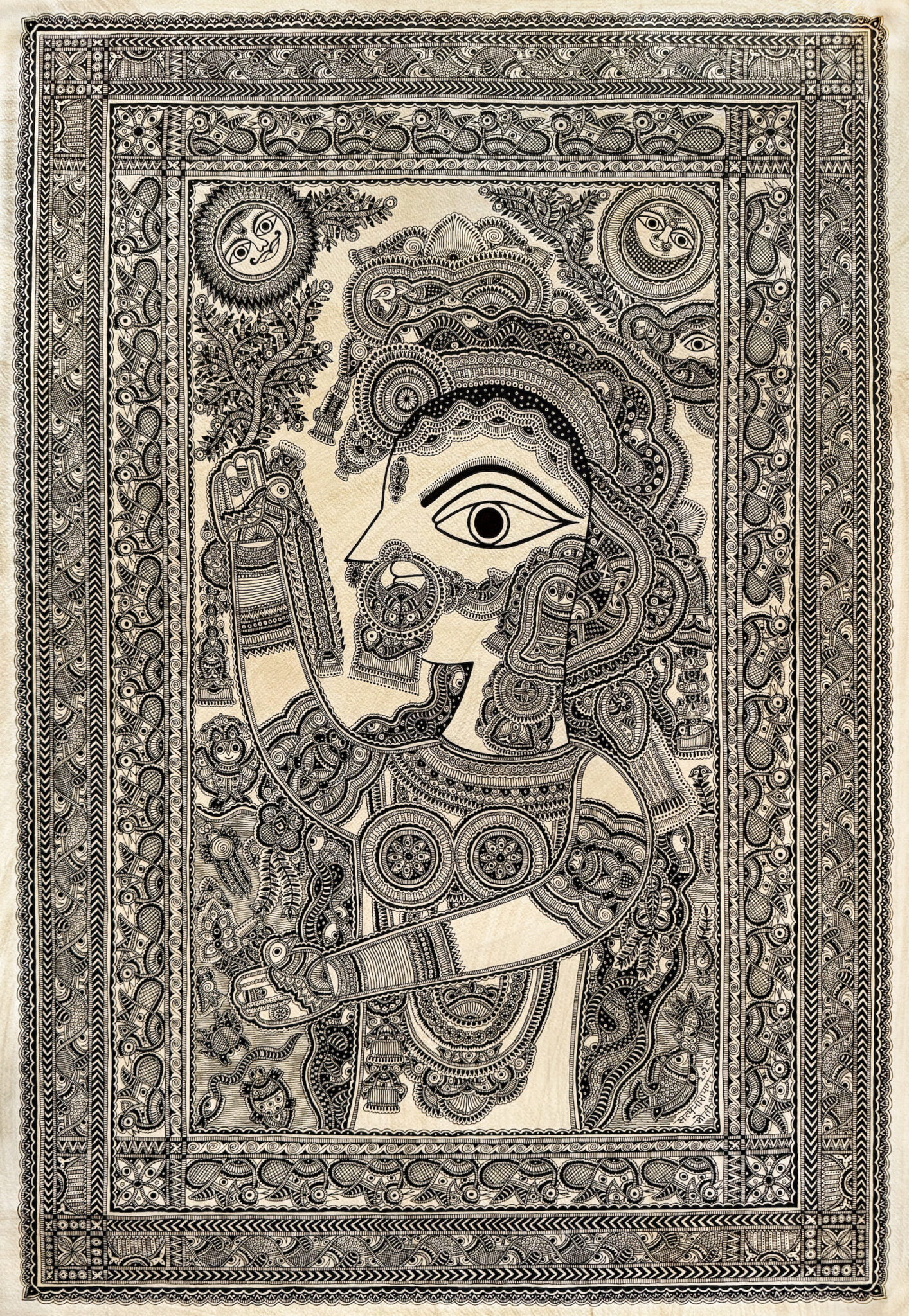
- Nature as Goddess (Shrishti): An incarnation of Parvati, Shrishti personifies nature itself. The sapling in her hand alludes to creation, while birds, fish, and other living creatures gather around her to celebrate the abundance of the natural world.
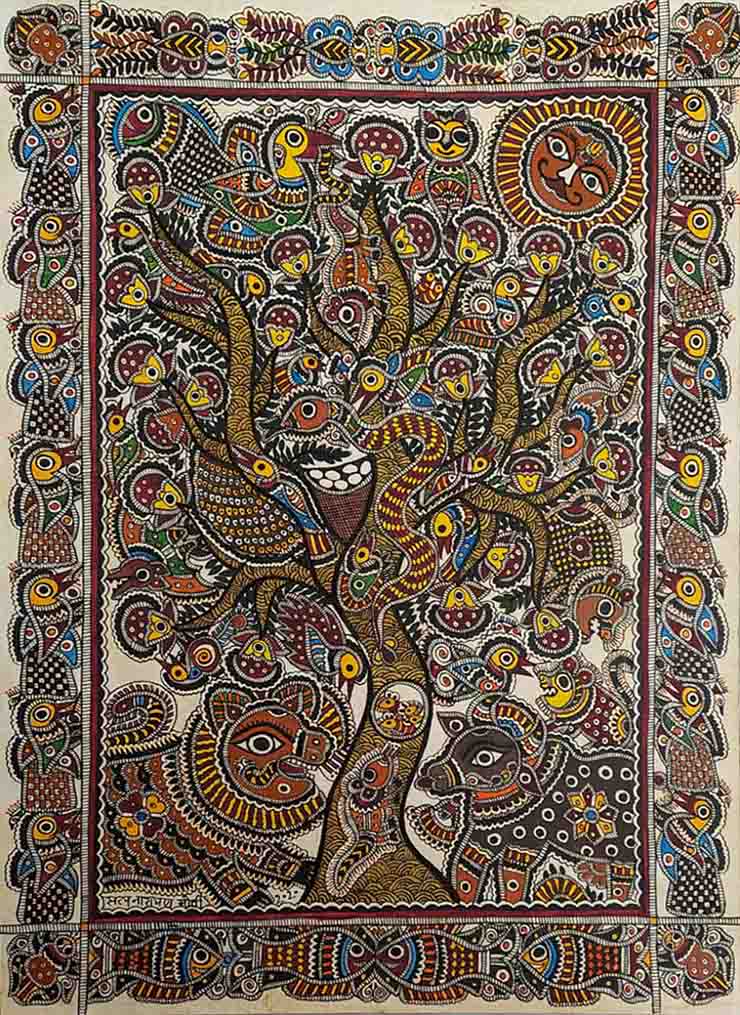
- The Tree of Life: One of the most enduring images in Indian art, the Tree of Life represents creation, protection, and the cycle of life that encompasses all beings. According to mythology, Brahma resides in the roots; Vishnu in the leaves, fruits, and bark; and Shiva in the branches that visually echo his matted locks. Birds and animals gather around the tree, reinforcing themes of vitality and abundance.
- Animals: While animals may stand for ideas such as fertility or affection, they also appear as subjects in their own right. For example, paintings may depict a family of giraffes or a crocodile mother, blend observations of the natural world with folk allegories about human relationships.
- Fish: Where there are fish, there is water, so these aquatic creatures have long represented fertility, prosperity, and plenitude.

Everyday Life: Wedding Customs and Sacred Rituals
Mithila art also documents the domestic milestones and rituals of rural Indian life, with wedding ceremonies among its most frequently depicted subjects.
Key motifs in depictions of Indian customs:
- Doli (Palanquin): In Mithila communities, the bride traditionally travels to her new husband’s home in a palanquin, signaling her transition into married life.
- Auspicious Foods: Bananas, fish, rice, sweets, and yogurt accompany the bride to invite prosperity and good fortune into her new home.
- Sindoor (Red Powder) Box: Worn by married women on their foreheads and in the parting of their hair, the vivid red sindoor signifies marital status while invoking blessings for a long and prosperous marriage.

The more one looks at a Mithila painting, the more facets open up and stories begin to emerge, making every viewing a journey of discovery.
We invite you to explore our curated collection of Madhubani (Mithila) paintings at https://laasyaart.com/mithila-art. Please reach out to us at info@laasyaart.com or +1 650-770-9088 to buy authentic Madhubani art online or view the paintings in person at our gallery in Palo Alto (San Francisco Bay Area).